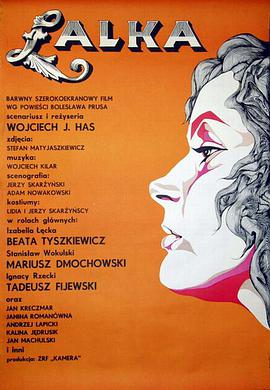
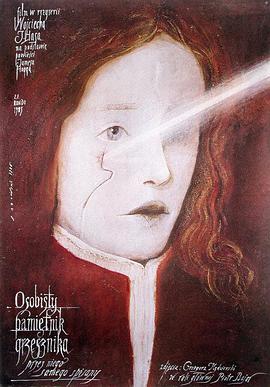
The Doll is a novel by Bolesław Prus, which is considered one of the finest Polish novels ever written. It was adapted into a movie that was compared to Stendhal's Le Rouge et le Noir. The novel follows the life of young Stanislaw Wokulski, who is forced to work as a waiter at Hopfer's restaurant while dreaming of a life in science. After participating in the failed 1863 Uprising against Tsarist Russia, he is sentenced to exile in Siberia. On his eventual return to Warsaw, he becomes a salesman at Mincel's haberdashery. He marries the late owner's widow (who eventually dies), and uses her money to set up a partnership with a Russian merchant he met while in exile. These two merchants go to Bulgaria during the Russo-Turkish War of 1877-78, and Wokulski makes a fortune supplying the Russian Army. In his quest to win Izabela, daughter of the vacuous, bankrupt aristocrat, Tomasz Łęcki, Wokulski begins frequenting theatres and aristocratic salons. He also finds himself in financial trouble, but he helps Izabela's father out financially. The girl becomes aware of his affection, but she does not consent to accept him without true devotion or love.
![玩偶1968[电影解说]](/tpl/mstyle/images/220x307.jpg)